
How to Learn Order Flow Strategies in Trading (Complete Beginner-to-Advanced Guide)
Order flow trading is one of the most powerful approaches in modern financial markets. Unlike traditional technical analysis that relies on lagging indicators, order flow focuses on real-time buying and selling activity—giving traders a deeper understanding of what market participants are actually doing.
If you want to learn order flow trading strategies, you need a structured approach that combines theory, tools, observation, and practice. This guide walks you through everything step by step.
What Is Order Flow Trading?
Order flow trading is the analysis of how buy and sell orders interact in the market. Instead of just looking at price charts, you examine:
- Market orders (aggressive buyers and sellers)
- Limit orders (passive liquidity)
- Volume traded at specific price levels
- Imbalances between buyers and sellers
The goal is to understand who is in control—buyers or sellers—and anticipate short-term price movements based on that information.
Why Order Flow Matters
Most retail traders rely on indicators like RSI or moving averages. These tools are derived from price and often lag behind the market. Order flow, on the other hand, shows:
- Real-time intent of traders
- Strength or weakness behind price moves
- Potential reversals before they happen
In simple terms, it lets you “see inside” the market rather than reacting after the fact.
Core Concepts You Must Learn First
Before jumping into strategies, you need to understand a few foundational concepts:
1. Bid vs Ask
- Bid: Price buyers are willing to pay
- Ask: Price sellers are willing to accept
When trades happen at the ask, buyers are aggressive. When trades happen at the bid, sellers are aggressive.
2. Market Orders vs Limit Orders
- Market Orders: Execute immediately (move price)
- Limit Orders: Sit in the order book (provide liquidity)
Order flow traders track how these interact to identify pressure.
3. Volume and Delta
- Volume: Total contracts traded
- Delta: Difference between buying and selling pressure
Positive delta = more aggressive buyers
Negative delta = more aggressive sellers
4. Liquidity
Liquidity refers to how many orders are available at a given price. Large liquidity levels often act as support or resistance.
Tools You Need to Learn Order Flow
To trade order flow effectively, standard charts are not enough. You’ll need specialized tools:
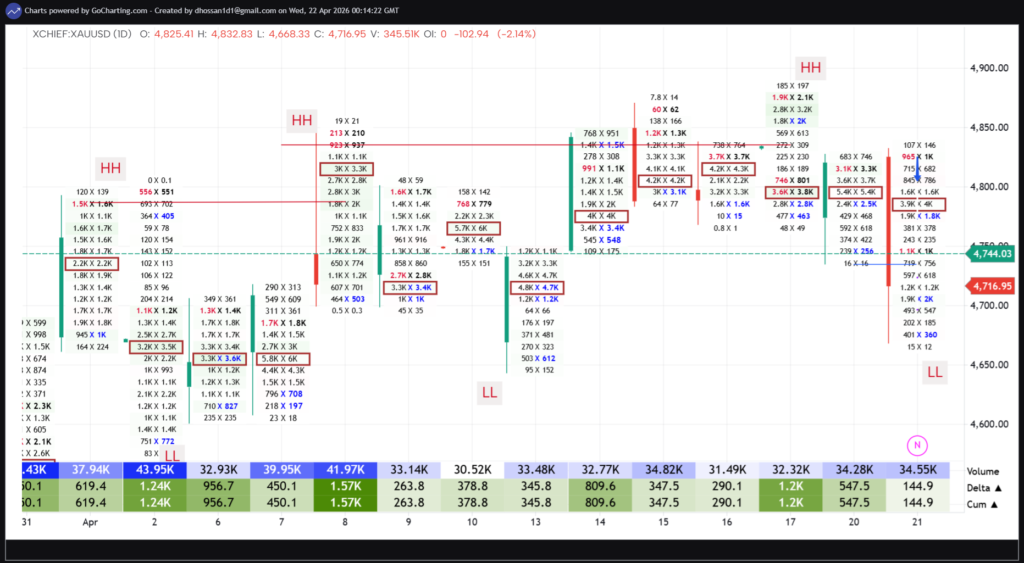
1. Footprint Charts
These show volume traded at each price level inside a candle. They help you see:
- Buyer vs seller dominance
- Absorption (large players stopping price)
- Imbalances
2. DOM (Depth of Market)
The DOM displays live order book data, showing:
- Pending buy/sell orders
- Real-time order execution
This is essential for scalping and short-term trading.
3. Volume Profile
This tool shows how much volume was traded at each price level over a period. Key areas include:
- High Volume Nodes (HVN): Strong interest zones
- Low Volume Nodes (LVN): Fast-moving areas
4. Time & Sales (Tape)
This shows every executed trade in real time. It helps you spot:
- Large institutional activity
- Sudden bursts of buying or selling
Step-by-Step Learning Path
Step 1: Understand Market Structure
Before using order flow, you must understand:
- Trends (higher highs / lower lows)
- Support and resistance
- Range vs breakout environments
Order flow works best when combined with structure.
Step 2: Learn to Read Footprint Charts
Start by observing:
- Where volume clusters
- Where buyers/sellers get trapped
- Reversal patterns at key levels
Spend time watching charts replay rather than trading immediately.
Step 3: Identify Key Order Flow Patterns
Here are some common patterns:
Absorption
- Large limit orders absorb aggressive buying/selling
- Price fails to move despite high volume
→ Often signals reversal
Imbalance
- Strong difference between buying and selling volume
→ Indicates momentum continuation
Exhaustion
- High volume but no continuation
→ Signals trend weakening
Step 4: Combine Order Flow with Key Levels
Order flow is most powerful at important areas:
- Support and resistance
- Previous highs/lows
- Supply and demand zones
Example:
If price reaches resistance and you see seller absorption, that’s a high-probability short setup.
Step 5: Practice in Simulation
Before risking real money:
- Use replay mode
- Practice identifying patterns
- Track your decisions
This builds pattern recognition without emotional pressure.
Simple Order Flow Strategy for Beginners
Here’s a basic strategy to get started:
Setup:
- Identify a key support or resistance level
- Wait for price to approach the level
Confirmation:
Look for one of the following:
- Absorption at the level
- Delta divergence (price goes up but delta weakens)
- Failed breakout
Entry:
- Enter after confirmation (not before)
Stop Loss:
- Place beyond the level
Take Profit:
- Next support/resistance level
Common Mistakes to Avoid
1. Overcomplicating Tools
Beginners often use too many indicators. Focus on one or two tools first.
2. Ignoring Context
Order flow signals without market structure can be misleading.
3. Trading Every Signal
Not every imbalance or volume spike is tradable. Wait for high-quality setups.
4. Lack of Patience
Order flow trading requires observation and discipline. Avoid impulsive trades.
How Long Does It Take to Learn?
Learning order flow is not instant. Typical progression:
- 1–2 months: Understanding basics and tools
- 3–6 months: Recognizing patterns consistently
- 6–12 months: Developing profitable strategies
Consistency and screen time are key.
Best Markets for Order Flow Trading
Order flow works best in centralized markets with reliable data:
- Futures (most popular)
- Stocks (with proper data feeds)
- Forex (less reliable due to decentralized nature)
Final Tips for Success
- Focus on quality over quantity
- Record and review your trades
- Build one strategy before expanding
- Stay disciplined with risk management
Order flow trading is a skill that rewards patience and precision. Once mastered, it can give you a significant edge by showing what the market is doing right now, not what it did in the past.
Conclusion
Learning order flow strategies is a journey that combines technical knowledge, observation, and real-world practice. By mastering core concepts, using the right tools, and focusing on high-probability setups, you can develop a powerful trading edge.
Start simple, stay consistent, and build your expertise step by step.